
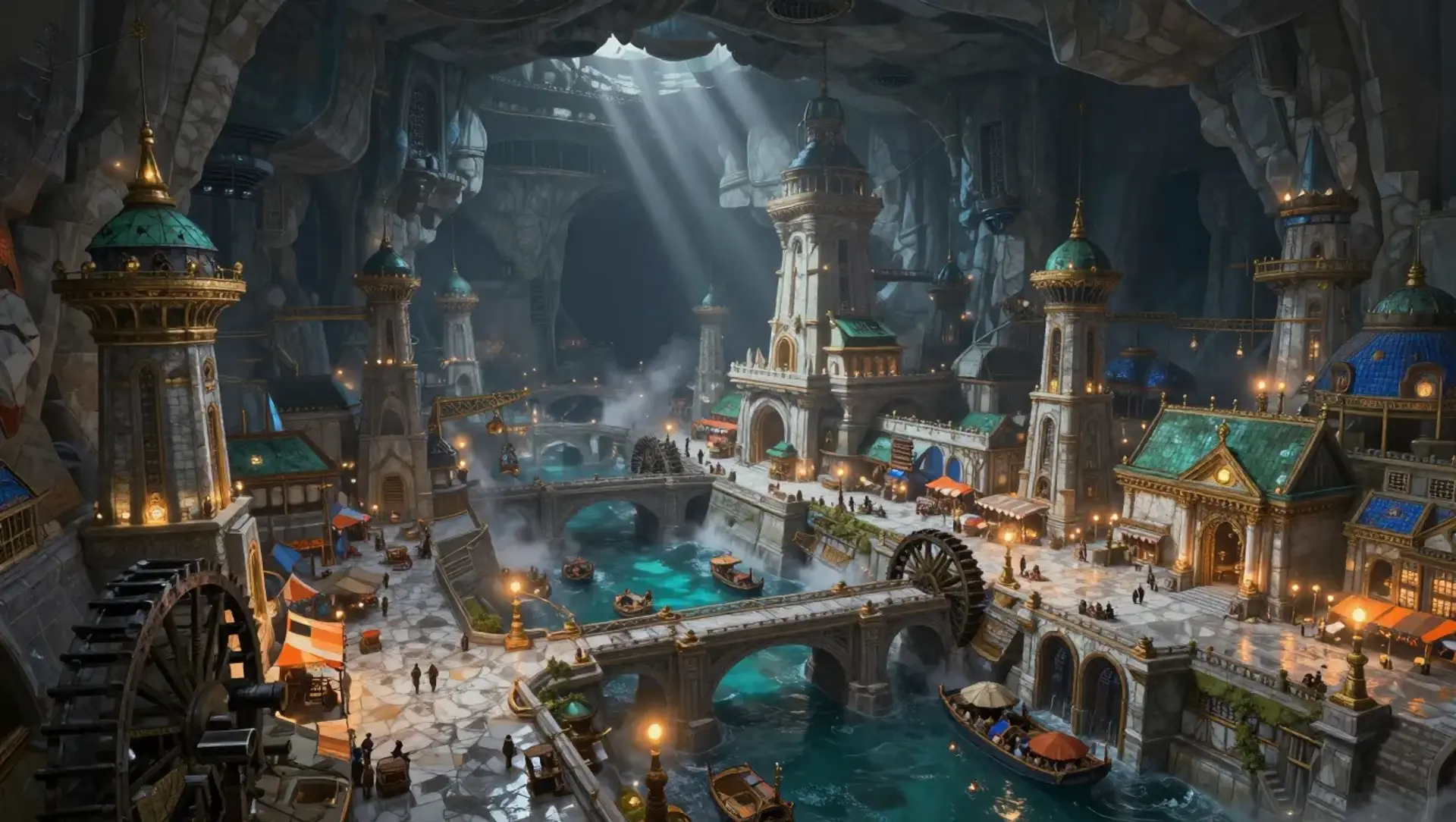
Reservoir Market, the Deep-Flow Bazaar
Reservoir Market, called the Deep-Flow Bazaar by residents, is a subterranean city built atop the Great Reservoirs beneath the Crown Oasis. Nearly seventy thousand people live among marble wharves, hydro-vault granaries, water-wheel shafts, tax bastions, and misty bridges. It is the region’s wholesale exchange and aquifer headquarters, where grain, minerals, textiles, and water rights change hands beneath the authority of Verulana’s Sultanate.
Reservoir Market, the Deep-Flow Bazaar
Where every sack, barge, and sip passes beneath a clerk’s eye.
“Reservoir Market breathes like a living machine. Every district carries the smell of wet limestone, lamp oil, bruised citrus, and iron warmed by turning gears. Barges groan through black arches while bells mark water allotments above the thunder of sluices. Traders speak in clipped numbers, magistrates carry sealed tablets, and resistance couriers vanish into mist-veiled service tunnels before the next wheel turns.”
Gallery
Connections
Geography
Culture
The city believes anything can be measured, priced, or negotiated, including mercy. Competence earns respect faster than birth, but written authorization outranks personal virtue. Residents distrust grand promises and admire people who keep water moving under pressure. Waste is treated as a moral failure. Hoarding, falsifying measures, and interrupting a canal are considered worse than ordinary theft because each threatens lives beyond the victim.
Reservoir Market favors practical spectacle. Water-dancers perform in sluice courts, using weighted ribbons and small spells to imitate currents, while ledger-singers recite famous bargains in rhythmic verse. Children race carved cork boats through gutter channels. Wealthy patrons commission mosaic maps of family water rights, and poorer workers decorate helmets, oars, and tool handles with bright blue tile. Public arguments often become informal theater.
History
Government
The lower reservoir pressure has become irregular, causing canals to surge at night and run weak during the day. Vale’s office insists the fluctuations are natural, while engineers warn that someone is altering the deep gates.
A grain shortage is developing despite full official inventories. Merchant ledgers contradict Citadel records, and workers have begun breaking into sealed storehouses.
The Free Cistern League has started opening illegal taps in poor quarters. The Measured Crown plans a mass arrest, but several Watch officers may refuse the order if violence begins.
Economy
Fresh lamp oil, skilled pumpwrights, and unregistered access to clean water are scarce. The city has abundant food on paper, but hoarding and falsified inventories create sudden shortages in working districts.
Defenses
The Deep-Flow Watch combines armored guards, canal pilots, engineers, and tax escorts. Its officers carry hooked polearms for controlling crowds and rescuing workers from canals. The Watch is strongest around the Citadel and weakest in the older service galleries, where resistance networks know the walls better than any patrol.
Law & Order
- crime Level
- Moderate in public districts, high in the service galleries and bonded warehouses. Theft often involves forged contracts, diverted cargo, or access to restricted water rather than street violence.
- enforcement
- The Deep-Flow Watch patrols bridges, docks, and granary entrances. Citadel clerks investigate economic crimes, while canal officers handle emergencies. The Watch is effective when orders are clear and compromised when merchant licenses or water privileges are involved.
- typical Punishment
- Fines, confiscation of goods, suspension of trade licenses, forced labor on public maintenance, and imprisonment in the Citadel’s damp holding cells. Sabotage of a reservoir can bring permanent exile or execution under emergency law.
Calendar of Events
Turn Reservoir Market, the Deep-Flow Bazaar into a sheet
A high-res, share-ready sheet you can post or print.