
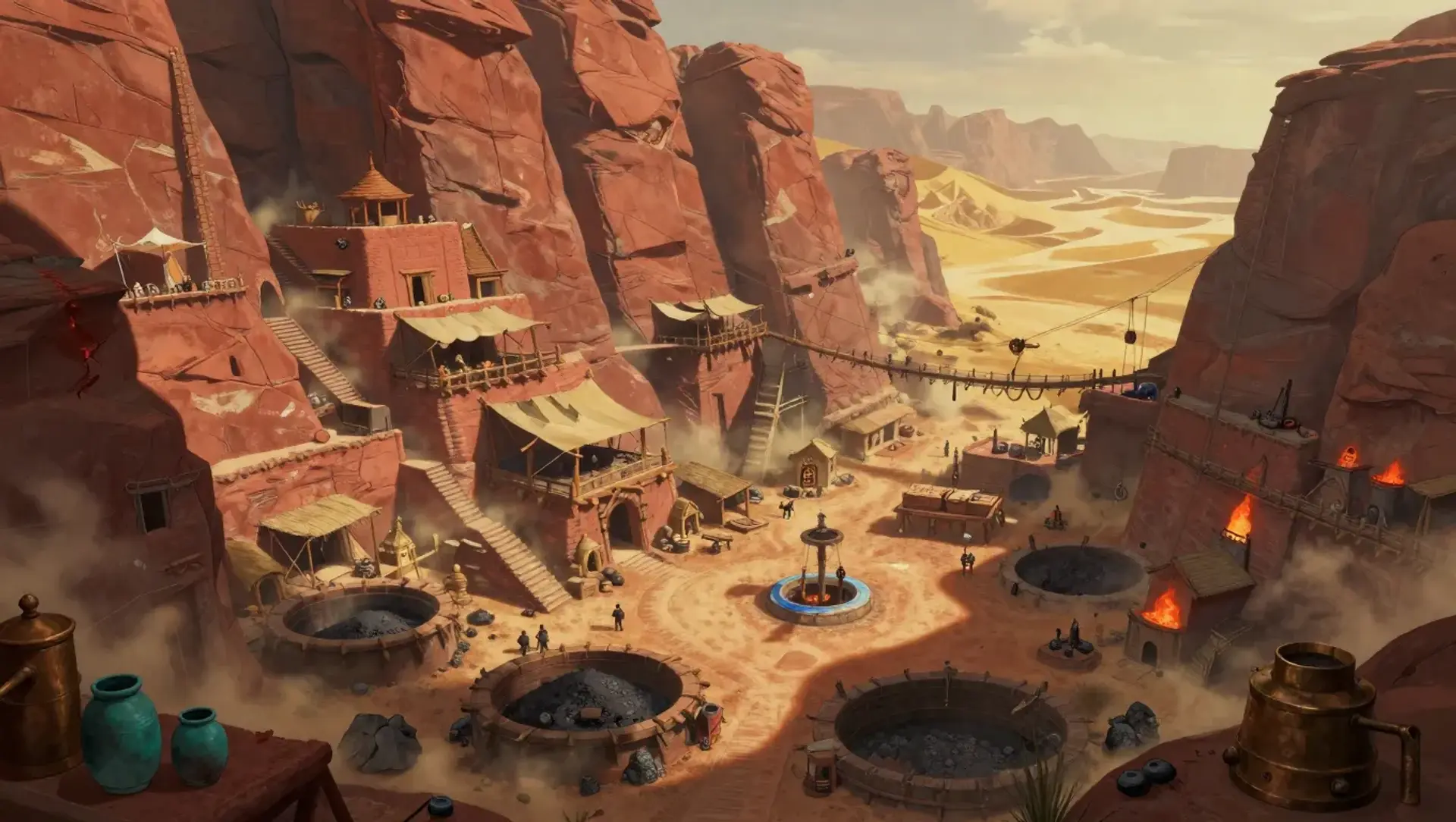
Zafar al-Rimal
Zafar al-Rimal clings to the sides of a dry wadi where sandstone ravines expose mineral seams and fragments of a civilization older than the Sultanate. The settlement survives because the canyon offers shade, defensible terraces, and access to a deep aquifer reached by the communal well. Its defining truth is simple and dangerous: the village was built over a buried pre-Sultanate machine that slowly shifts the surrounding rock, and its tremors are being hidden because they reveal extraordinarily valuable relic chambers.
Zafar al-Rimal
A cliffside mining camp where every tremor reveals a debt, a relic, or a buried door.
“Heat shimmers above Zafar al-Rimal, turning every distant ridge into wavering gold. Ore dust coats tongues, teeth, and sweat-darkened scarves. From the canyon floor comes the steady clang of hammers, the hiss of cooling metal, and the groan of pulley-lifts hauling stone toward the terraces. Beneath that familiar labor, the settlement listens for deeper sounds, because every tremor may mean profit, collapse, or something waking below.”
Gallery
Connections
Geography
Culture
The settlement respects anyone who works, shares water, and warns others before bringing down unstable stone. Reputation matters more than legal ownership, though both are constantly contested. Residents distrust distant officials and corporate syndicates, yet many accept their contracts when debts, injuries, or dry wells leave no alternative. A useful person may be forgiven for almost anything except hiding danger from the next shift.
Zafar al-Rimal favors practical art shaped by harsh conditions. Salvage mechanics decorate tools with colored wire, etched tin, and fragments of glazed relic tile. At night, workers gather around the communal hearth for drum rhythms, call-and-response work songs, and stories judged by how accurately they describe a cave-in. Gambling centers on ore samples, pulley races, and guesses about which shaft will fail next.
History
Government
A series of tremors has cracked the well's inner lining, but Samira has ordered repairs hidden until the current syndicate contracts are completed. If the shaft network shifts again, the settlement may lose its only reliable water source.
The Verulanan Prospecting Combine claims the deepest shafts under a contract signed by Samira's late predecessor. Independent miners insist the contract excludes relic chambers and was altered after the original witness died.
Economy
Water, sound timber, skilled healers, and trustworthy structural engineers are scarce. The settlement can smelt ore, but it cannot replace damaged machinery or support a large influx of workers without outside supplies.
Defenses
The Shaft Watch is a rotating militia selected from miners, mechanics, and caravan hands. Its members know every stair, lift, and emergency tunnel, but they are divided over whether the settlement should defend independent claims or protect syndicate shipments.
Law & Order
- crime Level
- Moderate. Theft, contract fraud, equipment sabotage, and water ration violations are common. Serious violence is less frequent because most residents depend on one another during cave-ins.
- enforcement
- The Shaft Watch investigates immediate threats, while Warden Samira Qadir convenes public hearings at the communal hearth. Syndicate guards enforce company contracts in the pits, creating constant jurisdictional friction.
- typical Punishment
- Restitution, loss of claim, public labor repairing stairs or supports, and temporary water ration restrictions. Repeated sabotage or violence can result in exile into the Sunken Sun, though this sentence is rarely carried out without a caravan escort.
Calendar of Events
Turn Zafar al-Rimal into a sheet
A high-res, share-ready sheet you can post or print.