Skip to content
Create
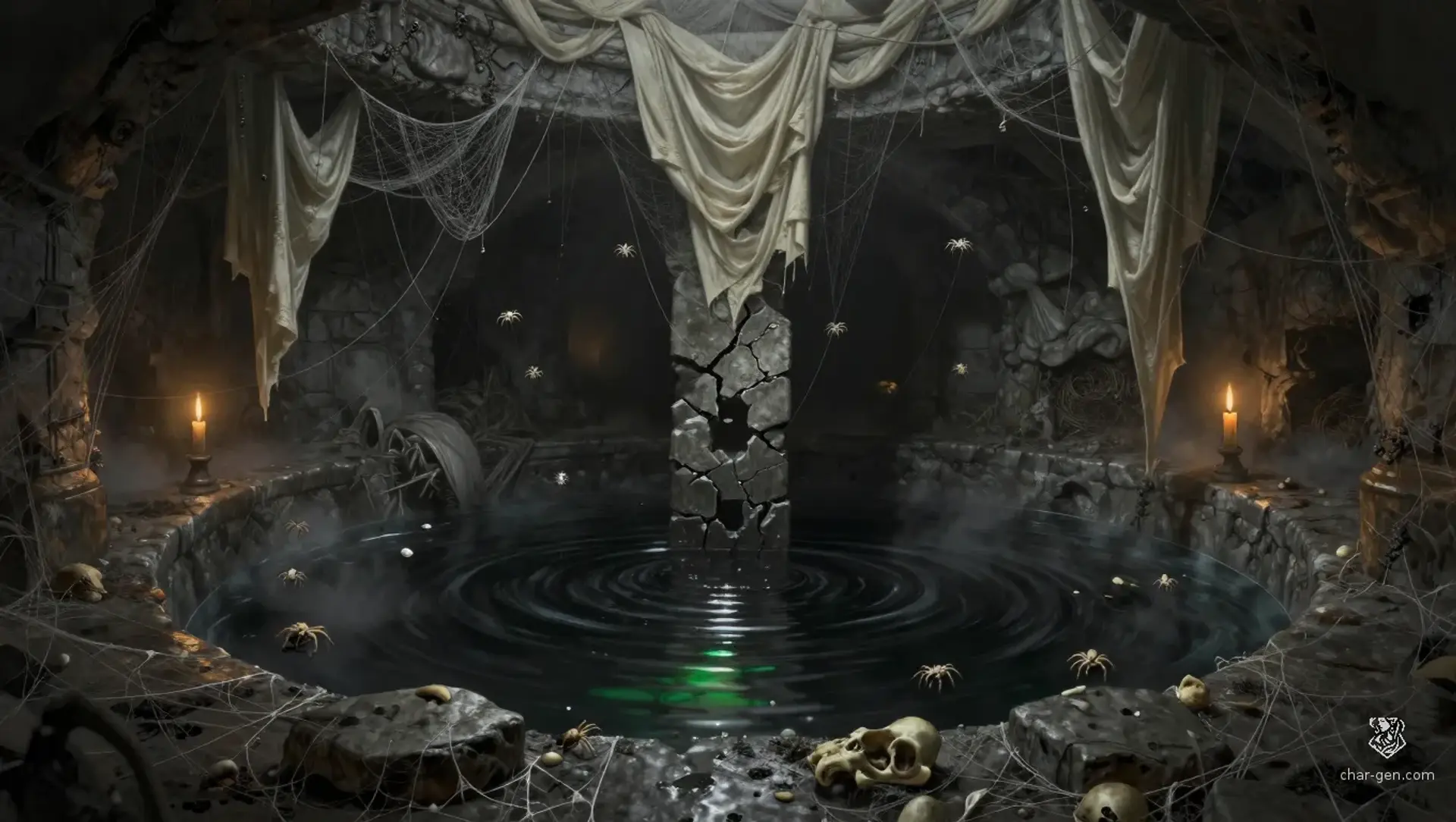
The Blackwater Spider Cistern - AI-generated fantasy Hazard

The Blackwater Spider Cistern

The Spider-Filled Cistern is an environmental hazard in which web-choked stonework, concealed spider swarms, and fouled water turn a seemingly ordinary dungeon reservoir into a living ambush site. The danger comes from movement, noise, and the characters' own attempts to cross the room.

Hazard EntryEnvironmentalLevel4Simple

The Blackwater Spider Cistern

4LevelUncommonRarityDungeonEnvironment
EnvironmentalDungeonWebPoisonWaterSimple Hazard
Level4
|
HPNot applicable as a single hazard. Web sections have 5 hit points each. The Brood Nest has 15 hit points.
|
AC13
|
TypeEnvironmental
|
ComplexitySimple
|
RarityUncommon

Defenses

AC13
HardNot applicable in D&D 5E. Web sections have 5 hit points, and the Brood Nest has 15 hit points.
HPNot applicable as a single hazard. Web sections have 5 hit points each. The Brood Nest has 15 hit points.
BT The hazard is permanently disabled when the main webbed nest is destroyed and the cistern is thoroughly flushed or drained.
Fort+Not applicable in D&D 5E. Use Constitution saving throws as listed in the effects.
Ref+Not applicable in D&D 5E. Use Dexterity saving throws as listed in the effects.
Will+Not applicable in D&D 5E. The hazard does not use mental saving throws.
Immune
The hazard is immune to psychic and poison damage., The webbing and Brood Nest are immune to damage from nonmagical attacks that are not slashing or fire damage.
Resist
The hazard has resistance to bludgeoning, piercing, and slashing damage from nonmagical attacks., The spiders' environmental effects are unaffected by difficult terrain or darkness.
Weak
Fire damage clears web sections efficiently., Bright light reveals concealed web strands and the Brood Nest., The spiders avoid strong wind and running water., Slow, quiet movement reduces the chance of triggering the hazard.
EnvironmentalDungeonWebPoisonWaterSimple Hazard

Detection

PerDC 13 Wisdom (Perception) to notice concealed web strands, spider movement, and the safest route. DC 15 Wisdom (Perception) to notice the Brood Nest beneath the central stone platform before the hazard triggers.
StlDC 12 before the hazard triggers. The hazard is automatically noticed once a creature enters the central pool, tears through a major web curtain, or attacks the Brood Nest.
InitThe hazard acts on initiative count 20, losing initiative ties. It takes no action unless triggered, then uses its Venomous Swarm effect once and continues to threaten the chamber through its routine.

The cistern is a round, sunken chamber filled with ankle-deep black water and dense curtains of webbing. Pale spiders cling to the walls, the ceiling, and the undersides of loose stones. A cracked stone drain descends into deeper darkness at the center of the room.

Standard Engagement

Trigger

The hazard triggers when a creature enters the central pool, touches the central drain, tears down a major curtain of webbing, attacks the Brood Nest, or makes a loud impact in the chamber. It also triggers if three or more creatures enter the cistern at once.

Routine

On initiative count 20, if the hazard has been triggered, the cistern produces one effect determined by the creatures' positions: creatures in web-filled areas are targeted by Clinging Webs, creatures in the central pool risk the Suctioning Drain, and creatures near the walls are attacked by skittering spiders. The DM can describe this as movement and pressure rather than a separate monster attack. The hazard does not make attack rolls.

Reset

After the initial eruption, the remaining spiders retreat into cracks and resume waiting. The hazard resets after 1 hour unless the Brood Nest is destroyed. If the nest survives, the hazard can trigger again whenever a creature crosses the central pool or tears down a major web curtain.

Clinging Webs

Each creature that starts its turn in a web-filled area must succeed on a DC 13 Dexterity saving throw or become restrained by sticky webbing until the end of its next turn. A restrained creature can use its action to make a DC 13 Strength check, escaping on a success. The webbing can also be destroyed as described under Countermeasures.

Venomous Swarm

When the hazard triggers, a cloud of irritated spiders erupts from the walls and water. Each creature in the cistern must make a DC 13 Constitution saving throw, taking 10 (3d6) poison damage on a failed save, or half as much damage on a successful one. A creature that fails the save is poisoned until the end of its next turn.

Suctioning Drain

A creature that moves through the central pool or falls into the drain must succeed on a DC 13 Strength or Dexterity saving throw or be pulled 10 feet toward the drain and knocked prone. The creature takes 7 (2d6) bludgeoning damage and must repeat the save at the start of its next turn if it remains in the drain's current.

Web-Choked Terrain

The cistern is dimly lit only where characters provide light. Web-filled squares are difficult terrain. A creature that dashes through a web-filled square has disadvantage on the Dexterity saving throw against Clinging Webs.

Vibration Sense

The spiders are highly sensitive to vibration. If a creature uses thunder damage, falls, or makes a loud impact in the chamber, the hazard triggers immediately and all creatures have disadvantage on their first saving throw against Venomous Swarm.

Hidden Brood Nest

The Brood Nest is hidden beneath a loose central stone. It becomes visible when the stone is moved, when the chamber is brightly illuminated, or when a character succeeds on the DC 15 Wisdom (Perception) check described under Discovery.

Description

The Spider-Filled Cistern is an environmental hazard in which web-choked stonework, concealed spider swarms, and fouled water turn a seemingly ordinary dungeon reservoir into a living ambush site. The danger comes from movement, noise, and the characters' own attempts to cross the room.

Discovery

The hazard is discovered when characters enter the cistern or interact with its webbing. Before it triggers, careful characters can spot the web curtains, silk-wrapped bones, ripples around submerged shapes, and narrow dry ledges along the outer wall.

Archival Lore

The cistern once supplied water to a subterranean settlement. When the settlement fell, a colony of spiders nested in its dry upper vaults. Their silk sealed cracks in the masonry, trapped drowned vermin, and gradually turned the reservoir into a breeding chamber. The spiders now react to footsteps as though the entire dungeon were prey caught in a web.

Environment
Dungeon
Theme
Predatory infestation, contaminated water, claustrophobic dungeon exploration
Creator
An underground water cult, later claimed by generations of giant spiders
Purpose
Originally a dungeon water reservoir, the chamber became a defensive breeding ground after the spiders colonized it. The webs now protect eggs, drowned prey, and anything hidden beneath the cistern floor.
Game System
D&D 5E
Art Style
Gothic dungeon concept art, damp stonework, candlelit shadows, pale cellar spiders, heavy webbing, black water, unsettling environmental storytelling
Visual sheet

Turn The Blackwater Spider Cistern into a sheet

A high-res, share-ready sheet you can post or print.

Gallery

No gallery images yet.