
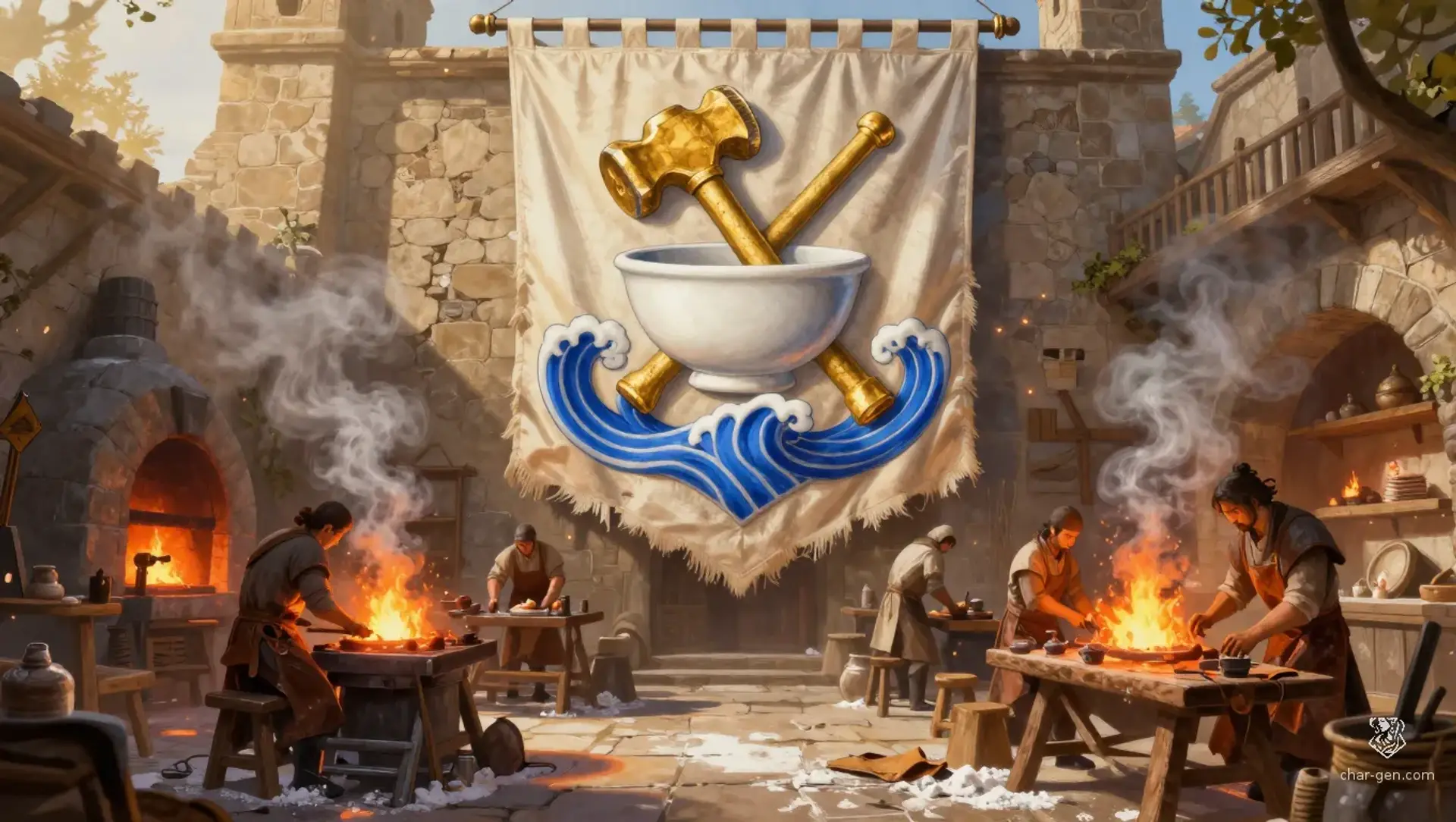
The Hammer and Bowl
In the first decades after the Ashen Floods, the Great Spring was stitched together by temporary cooperatives that shared ovens, forges, and drying racks. Those cooperatives were local, fragile, and often suspicious of one another. The founding trio realized that the settlements would keep losing skilled people unless talent could be recognized across district lines. They created the Hammer and Bowl as a compact of excellence and service, with membership granted only by nomination from peers and confirmed through public trial before traveling judges. The early years were humble but fierce. The consortium built floodproof bakehouses, standardized tool repairs, and trained apprentices who could move from settlement to settlement without losing standing. Their reputation grew when they ended the Grain Riot by opening communal stores and publicly shaming merchants who had hidden flour in dry cisterns. Their greatest setback came during the Sable Year, when a false accusation that the consortium was controlling bread prices sparked arson attacks on four workshops and killed twelve apprentices. The response to that tragedy hardened their rules, created the Hearth Seven, and made the annual competition not just a celebration but a test of legitimacy. Since then, they have become indispensable to the Great Spring, respected for fairness and feared for the economic shock that would follow if they ever truly withdrew their labor.
Turn The Hammer and Bowl into a sheet
A high-res, share-ready sheet you can post or print.