
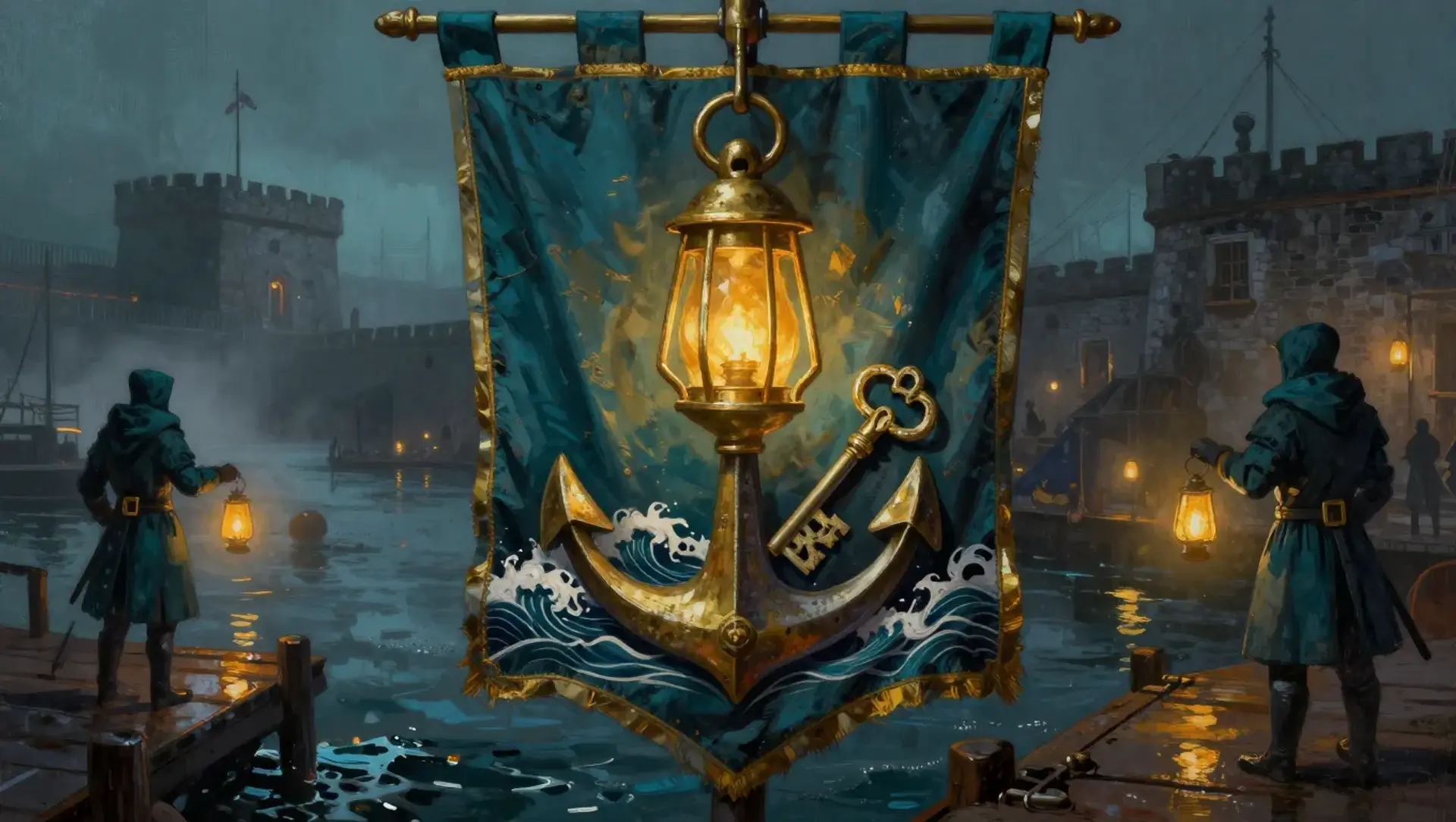
The Lantern Anchor
The Lantern Anchor's first century was built on emergency pragmatism. It began as Mara Vell's compact of clerks and captains, but its real rise came after the Ember Flood, when a storm surge destroyed half the waterfront and the city council fled inland. The faction organized food, ferrying, salvage, and reconstruction before any official authority returned. In gratitude, and through pressure, the city granted them expanded port powers. That was the first great triumph. The watershed moment came during Saltfire Night 41 years ago. A labor strike, customs purge, and smuggler war collided in the same week. Someone set fire to the tar sheds, the blaze raced along the piers, and gunfire broke out in the fog. The Lantern Anchor survived only by choosing sides fast and sacrificing one of its own founding families to preserve the port. The public story says they restored order. The real story is uglier: they executed rivals, buried records, and traded away the city's trust for continued control. Since then, the faction has grown richer but less unified. Older members still tell stories about preserving the harbor for everyone. Younger captains see the port as a machine for leverage. Their influence now stretches from the customs towers to offshore piloting, warehouse arbitration, harbor salvage claims, and the quiet sale of access to restricted quays. They are indispensable, feared, and increasingly fractured.
Maritime cartel, dock authority, and shadow customs network · Pragmatic, lawful on the surface, factionally ruthless underneath
The Lantern Anchor
“All tides pass through the lantern.”
Turn The Lantern Anchor into a sheet
A high-res, share-ready sheet you can post or print.