
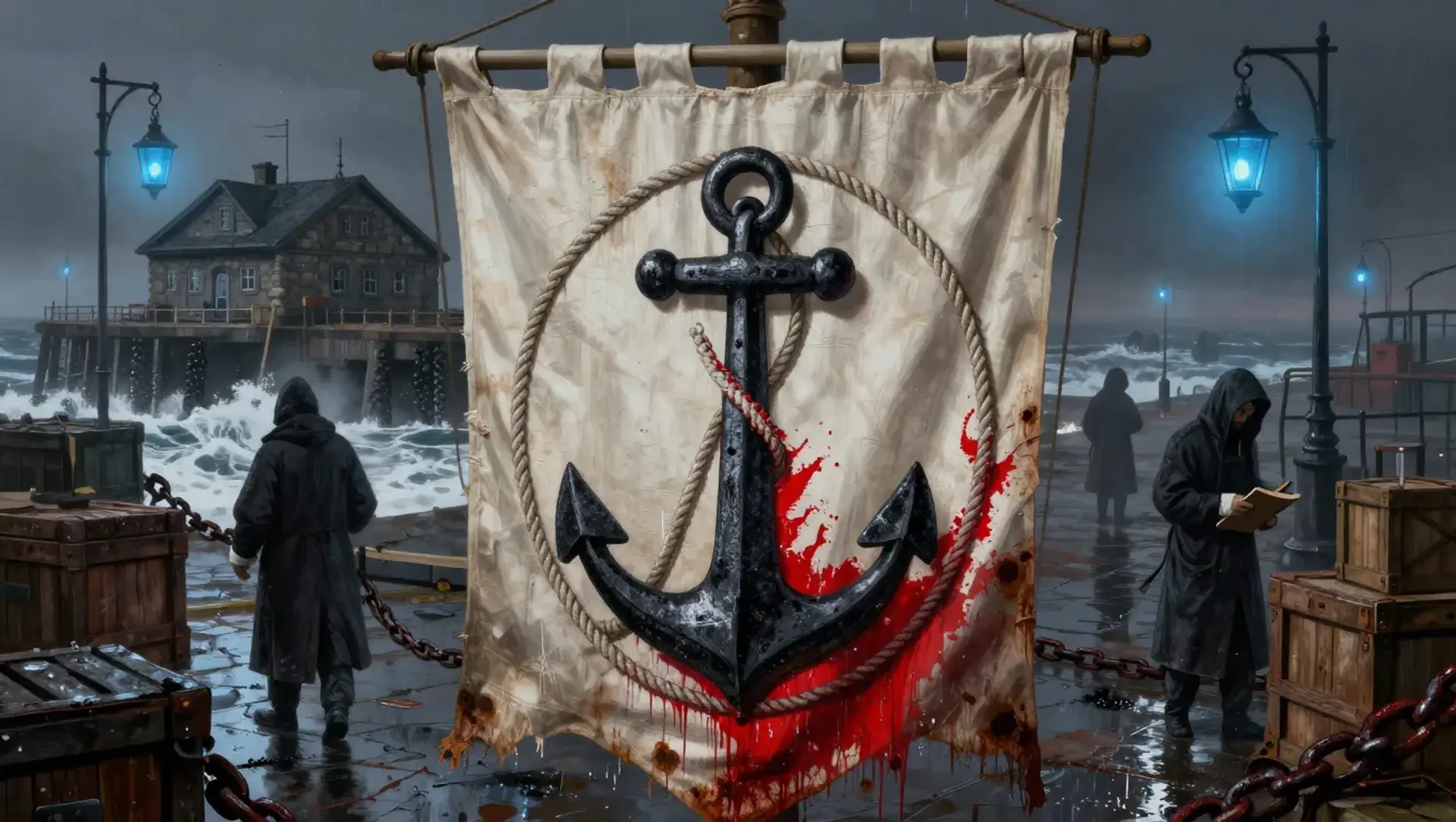
The Port Concord of Black Anchor
After its founding, the Port Concord grew by balancing three needs that constantly fought one another: keep the harbor open, keep profits flowing, and keep the peace from becoming a war. Their first major triumph came during the Three Winters Blockade, when the faction used false manifests, hidden skids, and salvage barges to feed the city while neighboring ports starved. That victory earned them loyalty and also taught them that hunger could be a weapon. Their first great setback came a decade later when the Bright Lantern Audit exposed a chain of forged tariff rolls. The city survived the scandal, but several reformers were hanged, and the surviving leadership became more secretive and more ruthless. The defining watershed moment was the Ashwake Riots forty years ago, when a dock strike turned into street fighting and a customs fire destroyed half the north quay. Rather than pick a side, the Concord split the settlement into protected zones, paid one faction of workers, armed another, and quietly paid restitution to the families of the dead. From then on, they ruled not as one unified body but as a negotiated truce among captains, clerks, and labor bosses. Today the faction is indispensable, mistrusted, and perpetually one betrayal away from fracture.
Port authority, dock syndicate, and quasi-civic smuggling consortium · Pragmatic neutral with lawful traditions, unlawful methods, and a public reputation for civic patriotism.
The Port Concord of Black Anchor
“If the tide takes it, the port remembers it.”
Turn The Port Concord of Black Anchor into a sheet
A high-res, share-ready sheet you can post or print.